Send Google Forms responses to Slack
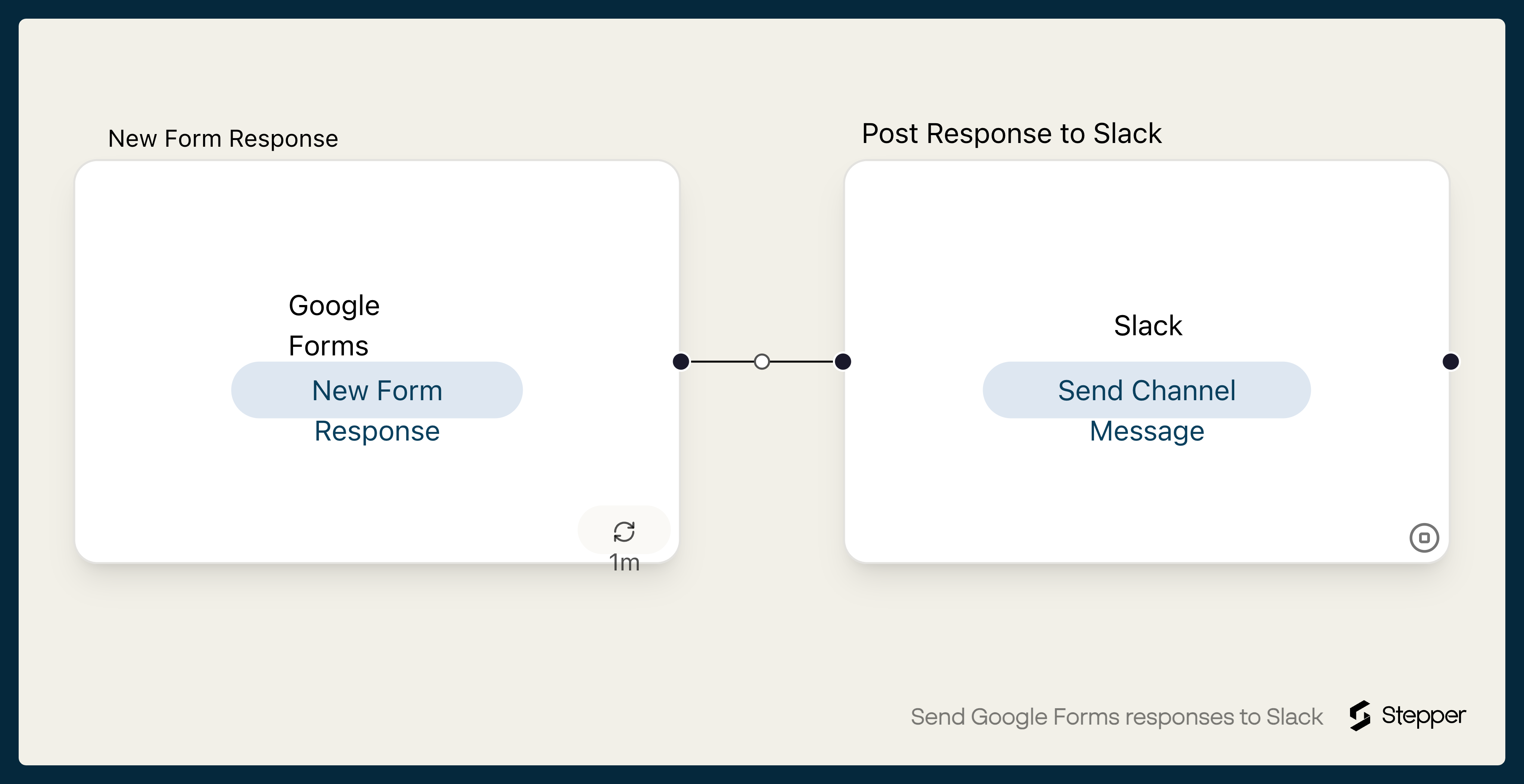
Post each new Google Forms response to a Slack channel, with your chosen answers on their own lines. Import this Stepper template, pick your form and channel.
Last checked
What it does
Google Forms can email you when a response comes in, but it can't post to Slack. The people who act on a sign-up, a bug report or a sales inquiry find out when someone remembers to check the Responses tab.
This workflow posts each new response to the Slack channel you choose, with the answers you choose on their own lines and the time it was submitted. Your team sees it where they already talk, and can reply in a thread to say who's handling it.
The template is set up for a contact form with Name, Email, Company and Message questions. If your form asks different questions, you swap in your own answers when you set it up.
The steps
-
Google Forms: New Form Response
Starts the workflow when the form you choose gets a new response.
-
Slack: Send Channel Message
Posts the response to your Slack channel from the Stepper Bot, with the Name, Email, Company and Message answers on their own lines and the submitted time.
What you need connected
You also need a Stepper account. Each app's page lists every trigger and action Stepper has for it.
How to set it up
- Sign in to Stepper, or create a free account.
- Click Use this template in Stepper. Stepper copies the workflow into your account and asks you to connect Google Forms and Slack if you haven’t already. Connect the Google account that owns the form.
- In the Google Forms trigger, choose your form.
- In the Slack step, choose the channel.
- Check the message. It uses answers to questions named Name, Email, Company and Message. If your questions are different, delete those lines and add your own answers with the data picker.
- Submit a test response and run a test. Stepper checks Google Forms for new responses on a schedule, so the message may take a few minutes to arrive.
- When the message looks right in Slack, click Publish.
What you can change
- The message. Put the answer people act on first, such as the type of request, and leave out answers nobody needs in Slack.
- The destination. Swap the step for Slack’s Send Direct Message action when one person handles every response.
- Extra steps. Add a Google Sheets row, or an AI step that sorts responses by topic, with a condition on each rule to post each topic to a different channel.